Evaluating the 1000 Best Design Prompt Collection for Creative Workflows
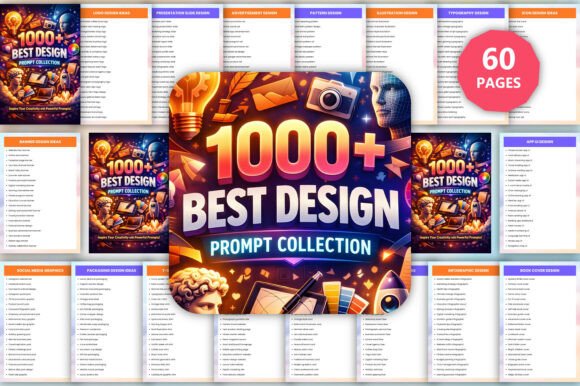
In the landscape of digital creativity, the bottleneck is rarely technical capability; it is almost always the initial spark of an idea. For graphic designers, UI/UX specialists, and digital artists, the pressure to produce fresh concepts daily can lead to significant creative fatigue. This is where structured resources like the 1000 Best Design Prompt Collection become relevant. Rather than a simple list of ideas, this resource functions as a comprehensive prompt vault designed to systematically dismantle creative blocks across various disciplines. Understanding what makes this collection distinct, how it compares to other ideation methods, and when it fits best into a professional workflow is essential for anyone looking to optimize their creative output.
Defining the Scope and Utility of the Collection
The 1000 Best Design Prompt Collection positions itself not merely as a repository of random suggestions but as a curated library of actionable directives. Its primary value lies in its breadth and categorization. Unlike generic brainstorming lists that might focus solely on logo shapes or color palettes, this collection spans multiple creative fields simultaneously. It includes specific prompts for branding assets like business cards and packaging, user interface elements such as dashboards and landing pages, and digital art concepts ranging from character design to NFT-ready visuals.
What distinguishes this resource is its adaptability to modern toolsets. While traditional design books often focus on manual illustration techniques, the 1000 Best Design Prompt Collection is engineered with the contemporary creator in mind. It serves equally well for a human illustrator sketching on paper and an AI image generator requiring precise text-to-image instructions. The prompts are structured to provide enough context to generate a unique outcome while leaving room for individual interpretation. This balance ensures that the output remains personalized rather than formulaic, a critical factor for professionals who need to maintain a distinct brand voice.
Comparative Analysis: Structured Prompts vs. Organic Brainstorming
When evaluating ideation tools, creators typically weigh structured resources against organic brainstorming or ad-hoc inspiration gathering. Organic methods, such as browsing social media feeds or visiting design galleries, rely heavily on passive consumption. While effective for mood setting, these approaches often lack the directive force needed to solve specific problems quickly. In contrast, the 1000 Best Design Prompt Collection offers an active framework. Instead of waiting for inspiration to strike, the designer selects a constraint or a scenario from the list and begins working immediately.
Another common alternative is using specialized software plugins or AI generators that offer built-in suggestion engines. These tools are convenient but often limited by their algorithmic biases and narrow scope. They may excel at generating variations of a single concept but struggle to pivot across different mediums—for example, moving from a mobile app interface to a print marketing campaign. The 1000 Best Design Prompt Collection bridges this gap by providing a unified set of prompts that cover everything from UI/UX web design to motion graphics and AR/VR concepts. This cross-disciplinary approach allows teams to maintain conceptual consistency even when shifting between different types of deliverables.
Strengths and Tradeoffs in Professional Application
The primary strength of this collection is its ability to accelerate the pre-production phase of any project. By offering over 1,000 ready-to-use prompts, it significantly reduces the time spent staring at a blank canvas. For agencies managing multiple clients, this efficiency translates directly into faster turnaround times. The inclusion of advanced creative concepts, such as futuristic game UI design and 3D modeling scenarios, also keeps practitioners ahead of industry trends, ensuring their portfolios remain relevant.
However, there are tradeoffs to consider. A reliance on pre-written prompts carries the risk of homogenization if used without critical thought. If every designer uses the same source material without adding their own stylistic flair, the resulting work could begin to feel derivative. Therefore, the 1000 Best Design Prompt Collection is most effective when treated as a starting point rather than a final blueprint. It requires the user to have a foundational understanding of design principles to effectively interpret and execute the prompts. It is not a substitute for education or skill, but rather a catalyst for applying those skills more rapidly.
Furthermore, the format of the files matters. Depending on the delivery method—whether a downloadable PDF, a searchable database, or a physical booklet—the utility changes. A static list may require manual searching, which can interrupt flow, whereas a digital, tag-based system allows for instant retrieval based on specific needs like "Instagram posts" or "packaging." Users should evaluate the accessibility of the file formats included in the collection to ensure they align with their existing digital asset management workflows.
Determining the Right Fit for Your Workflow
Deciding whether the 1000 Best Design Prompt Collection is the right resource depends largely on your current stage of career and the nature of your projects. For freelancers and solopreneurs who wear multiple hats, this collection is particularly valuable. It acts as a virtual team member, capable of suggesting directions for social media branding one minute and dashboard layouts the next. It helps solo creators maintain a high volume of diverse output without burning out.
For larger design agencies, the collection serves a different purpose: standardization and training. Junior designers can use the prompts to practice specific skills under guided constraints, while senior creatives can use them to facilitate rapid ideation sessions during client meetings. The variety of categories ensures that there is something applicable regardless of the client's industry, from tech startups needing futuristic AR concepts to local businesses requiring traditional flyer designs.
Conversely, this resource may be less suitable for highly niche specialists who work exclusively within a very narrow domain. If a designer focuses solely on architectural rendering, a generalist collection covering logos, mascots, and social media banners might contain too much irrelevant data. In such cases, a hyper-specialized toolkit would likely yield better results. Similarly, for beginners who lack the fundamental vocabulary of design, the prompts might feel overwhelming without additional guidance on execution.
Practical Implementation Strategies
To maximize the value of the 1000 Best Design Prompt Collection, users should adopt a strategic approach to integration. One effective method is the "Daily Challenge," where a designer selects three random prompts each morning and spends fifteen minutes sketching or prototyping solutions. This builds muscle memory and keeps creative pathways open. Another strategy involves using the collection as a reference during client briefings. When a client requests "something modern," flipping through the UI/UX or branding sections can provide concrete visual examples to anchor the conversation.
Additionally, the collection can be used to audit existing portfolios. By comparing past work against the advanced creative concepts listed, such as NFT art or motion graphics, designers can identify gaps in their skillset and plan their learning trajectory accordingly. The prompts act as a roadmap for professional development, highlighting areas where new expertise could expand service offerings.
Conclusion: A Tool for Sustained Innovation
The 1000 Best Design Prompt Collection represents a shift from reactive creativity to proactive ideation. It does not replace the designer's intuition or artistic vision; instead, it provides the scaffolding necessary to build upon them efficiently. While it has limitations regarding niche specialization and the potential for over-reliance, its versatility across graphic design, UI/UX, and digital art makes it a robust asset for most creative professionals. By understanding its strengths and integrating it thoughtfully into a broader workflow, designers can overcome blocks, explore new territories, and consistently deliver innovative solutions to their clients.